

High DA websites appear strong on the surface, but authority metrics alone do not always reveal the real condition of the ecosystem behind it. Many websites slowly lose visibility, crawl activity, trust consistency, and ranking strength long before major traffic drops become noticeable inside analytics dashboards. Much like a coral reef that still looks alive while weakening underneath, high DA websites can gradually decline when the supporting authority ecosystem stops growing and adapting naturally over time.
That’s why modern SEO is no longer just about maintaining strong authority metrics. The real challenge is keeping the backlink ecosystem active, relevant, trustworthy, and structurally healthy instead of depending only on historical authority signals that slowly lose effectiveness as search environments continue evolving.
When High DA Websites Start Losing Ground Silently
Many websites with strong DA scores slowly begin losing ranking strength without showing obvious warning signs at first. The authority may still appear impressive on reports and dashboards, but underneath, the supporting ecosystem often becomes outdated, less relevant, or disconnected from how modern search behaviour continues evolving.
That quiet decline is usually what makes recovery far more difficult later, because by the time the visibility drop becomes clearly noticeable, much of the authority ecosystem has already weakened underneath for a long time.
Warning Signs Most SEOs Miss Until It’s Too Late
Many SEO declines start long before major traffic drops become clearly visible. Small structural weaknesses usually begin forming quietly inside the backlink ecosystem while the DA score itself still appears stable and healthy on the surface.
Common warning signs often include:
- Declining crawl activity across important pages
- Backlinks losing relevance or becoming inactive over time
- Supporting content becoming outdated and disconnected
- Rankings fluctuating despite stable authority metrics
Most websites rarely decline all at once, the authority ecosystem usually weakens gradually underneath before the bigger visibility losses finally become noticeable.
PBNs Meaning – What You Need to Know Before Using Them
PBNs are often misunderstood because many people immediately connect them only with manipulation without understanding the real PBNs meaning inside competitive SEO environments. In reality, the effectiveness of a PBN usually depends much more on how well the network is structured, how naturally the relevance is maintained, and how smoothly it fits into the broader authority ecosystem rather than simply relying on the backlinks themselves.
That’s exactly why context plays such an important role when discussing PBN usage in modern SEO strategies today.
The Difference Between a PBN That Hurts and One That Helps
A weak PBN usually looks repetitive, overly artificial, and disconnected from the way natural authority behaves across real search ecosystems. Poor content quality, weak relevance, unstable crawl behaviour, and aggressive link patterns often make the network feel engineered purely for rankings rather than built around genuine authority support.
Stronger PBN networks focus much more on maintaining relevance consistency, stable content environments, natural authority flow, and balanced ecosystem behaviour over time. In most cases, the real difference comes down to whether the backlink structure feels naturally reinforced within the broader ecosystem or overly concentrated around manipulating rankings alone.
Why Power Backlinks Are the Recovery Layer Your Site Needs
When a high DA website becomes stagnant, adding more ordinary backlinks usually does very little to restore meaningful ranking momentum. Recovering lost visibility often requires stronger authority signals capable of rebuilding trust, improving crawl strength, and reinforcing the overall ecosystem supporting the site.
That’s why power backlinks often become an important recovery layer, especially when the existing authority structure has stopped generating consistent visibility growth on its own.
How Power Backlinks Rebuild Trust Without Triggering Penalties
Power backlinks usually work best when they strengthen existing relevance naturally instead of trying to force sudden ranking jumps aggressively. Search engines tend to trust gradual authority growth much more than backlink patterns that appear heavily concentrated or artificially accelerated in a short period of time.
A safer recovery strategy usually focuses on:
- Relevance continuity
- Natural authority growth
- Supporting content ecosystems
- Balanced visibility reinforcement
That balanced approach is often what helps rebuild trust and strengthen rankings without creating additional structural risks underneath the website.
Why High DA Sites Become Stagnant and Stop Competing
Many high DA websites slowly stop growing because the authority ecosystem around them no longer evolves while competitors continue strengthening their visibility and relevance aggressively. A strong historical DA score may still look impressive, but without continuous authority reinforcement, updated relevance signals, and active ecosystem growth, the site gradually starts losing competitive momentum.
That’s why many websites that once ranked strongly eventually become stagnant even though their DA metrics still appear powerful on the surface.
How to Layer PBNs and Power Backlinks to Revive a Dying Site
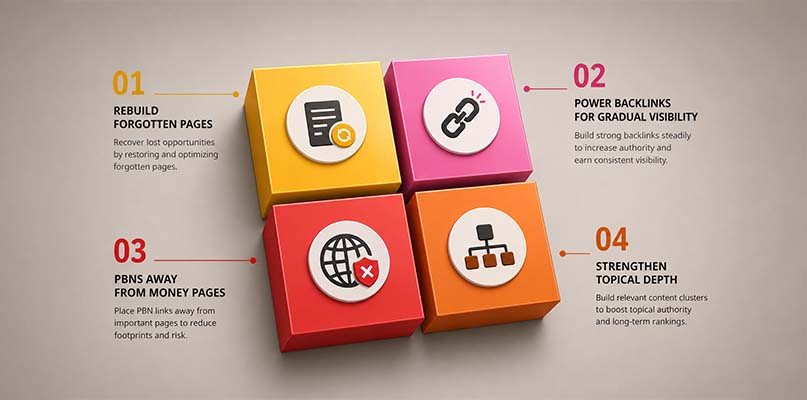
Recovering a declining website is usually less about adding more backlinks and more about restoring movement inside pages that search engines have slowly stopped trusting. When rankings become stagnant, pushing aggressive links directly into weakened pages often makes the instability worse instead of fixing it.
A smarter recovery structure usually focuses on:
- Rebuilding activity around forgotten pages before pushing stronger authority signals
- Using power backlinks to revive visibility gradually instead of forcing sudden ranking jumps
- Keeping PBN links further away from sensitive money pages during the recovery phase
- Strengthening topical depth so the website feels active and valuable again to crawlers
When the recovery process is layered patiently, the website usually regains traction much more naturally without creating another wave of volatility underneath the rankings.
Where PBNs Should Sit in Your Authority Recovery Stack
PBNs usually work much more safely when they support the broader recovery structure instead of being placed too aggressively near the most sensitive pages of the website. When the authority reinforcement feels more indirect and naturally distributed, the overall ecosystem tends to appear far more balanced and believable over time. Pushing strong authority signals too close to weakened pages too quickly often creates more instability instead of helping the recovery process.
A stronger recovery approach usually focuses on rebuilding the surrounding environment first through supporting content, improved topical relevance, and gradual authority reinforcement across different layers of the site. When PBNs are positioned deeper within that structure rather than acting as the center of the strategy, the recovery process often feels more stable, controlled, and sustainable in the long run.
The Sequencing That Separates a Successful Rescue from a Second Penalty
Recovering a weakened website is not just about adding stronger backlinks, the timing and order of the recovery process matter just as much. Many sites run into bigger problems because authority is pushed too aggressively before the ecosystem underneath is ready to support it properly. A rushed recovery often creates unstable visibility patterns that search engines notice much faster.
Recovery strategies usually focus on:
- Rebuilding relevance first
- Refreshing weak content
- Stabilizing crawl activity
- Scaling authority slowly
Stop Watching Your High DA Website Losing Power

Many website owners continue depending on old authority metrics while the ecosystem underneath slowly loses strength year after year. By the time major traffic declines become clearly visible, a large portion of the authority damage has often already been building quietly in the background through weakened relevance, declining crawl activity, and unstable backlink behaviour.
That delay is exactly what makes recovery much harder later, because rebuilding a damaged authority ecosystem usually takes far more effort than maintaining its health consistently from the beginning.
Most SEOs Realise They Waited Too Long Only After the Drop
Most SEO declines happen slowly in the beginning, which is why the early warning signs are often ignored or underestimated. Rankings may fluctuate slightly, crawl activity may weaken, backlinks can start losing consistency, and topical relevance slowly fades while the overall authority metrics still appear stable on the surface.
But by the time major visibility losses become obvious publicly, the authority ecosystem underneath has usually been weakening for much longer than expected. That’s why taking action early often creates far safer recovery opportunities than waiting until the decline becomes too severe to ignore.
FAQs:
- Why can high DA websites still lose rankings?
Because authority metrics alone do not guarantee a healthy or active SEO ecosystem.
- What are the early warning signs of SEO decline?
Weak crawl activity, outdated content, backlink decay, and unstable rankings.
- What makes a PBN dangerous in SEO?
Poor relevance, repetitive structures, and aggressive backlink behaviour.
- Why are power backlinks important for recovery?
They help rebuild trust, authority strength, and visibility momentum naturally.
- Why should SEO recovery happen gradually?
Aggressive recovery often creates instability and increases the risk of penalties.