

The internet no longer runs purely on information alone, it runs on visibility and attention. What people discover first online often shapes what they trust, engage with, and remember, which is why search visibility has slowly become one of the biggest competitive advantages in digital marketing. As that shift happened, backlinks started carrying much more influence because visibility itself began driving authority across entire industries.
PBN links continue staying relevant in SEO discussions largely because businesses realized organic authority growth often moves much slower than the pace of modern online attention. In highly competitive markets, waiting too long to gain visibility can sometimes mean losing audience interest before the content even gets a real opportunity to be noticed properly.
How PBN links are built and why they still work
PBN links are usually created by acquiring expired or aged domains that already carry existing authority, historical trust signals, and backlink profiles built from their previous online presence. Those domains are then rebuilt into websites that appear independent and capable of passing authority naturally through contextual links pointing toward target pages.
What makes these links continue working in certain situations is not just the backlink itself, but the authority relationship surrounding it. Search engines still rely heavily on backlinks to understand which websites deserve visibility, trust, and stronger positioning inside search results, especially within competitive industries where authority signals influence rankings aggressively.
As long as search algorithms continue evaluating trust through connected authority patterns, systems designed to strengthen or influence those signals will continue existing in different forms. That is exactly why PBN strategies have evolved over time instead of disappearing completely, even as search engines became far more sophisticated in how they evaluate backlink ecosystems.
Why the definition has quietly shifted as search algorithms evolved around them
Understanding what are PBN links today means recognising that the meaning has slowly changed over time because search algorithms themselves became much more advanced in how they evaluate authority online. Earlier PBN strategies focused mostly on placing backlinks aggressively, but modern systems are far more centered around building broader authority environments that appear naturally developed and structurally believable.
Today, stronger networks usually pay attention to:
- Content relevance
- Crawl consistency
- Hosting separation
- Authority behaviour patterns
That shift happened because search engines stopped treating backlinks as isolated ranking signals and started evaluating the entire ecosystem surrounding those links as part of how authority and trust are interpreted algorithmically.
More About PBN Links – What Nobody Explains After the Definition
Most conversations to know more about PBN links usually stop after explaining what they are technically, but very few people talk about how those links actually behave once they become part of a real SEO ecosystem. A backlink can exist on a page and still fail to create meaningful authority growth if the surrounding environment feels weak, disconnected, or overly engineered. That’s why modern SEO performance depends much more on how naturally the entire authority ecosystem behaves around the links rather than relying only on the backlinks themselves in isolation.
How PBN links interact with content quality and crawl behaviour most marketers overlook
PBN links rarely work independently from the content environment surrounding them because search engines now evaluate much more than the backlink alone. Content quality, crawl activity, engagement patterns, relevance consistency, and overall visibility behaviour all influence how strong or natural the authority signal feels over time. That means even a powerful backlink can slowly lose effectiveness when it sits inside a weak, inactive, or poorly maintained ecosystem.
A stronger authority structure usually benefits from:
- Consistent content activity
- Natural crawl behaviour
- Supporting relevance signals
- Stable visibility patterns
Without those surrounding layers reinforcing the environment naturally, even high-authority links often struggle to maintain stable ranking influence consistently over longer periods.
The misuse patterns that quietly explain why most PBN strategies fail

Most PBN strategies do not fail simply because PBN links exist inside the structure. They usually begin failing when the authority behaviour surrounding those links starts looking overly aggressive, repetitive, or disconnected from how natural visibility normally grows online.
A lot of networks slowly weaken because the patterns across the ecosystem become too obvious over time. When the same structures, linking styles, or content behaviour keep repeating across multiple sites, the authority no longer feels naturally developed.
Weak topical alignment and over-optimized anchor patterns also create long-term instability much faster than many marketers expect. Even if rankings move initially, inconsistent relevance usually causes the broader authority structure to lose trust gradually underneath.
Thin AI-style content and aggressive outbound linking often make the ecosystem feel engineered instead of organically maintained. Once those signals start stacking together repeatedly, maintaining stable long-term authority becomes much more difficult.
Why ranking late in the attention economy loses audience trust that organic growth alone cannot recover
In today’s attention-driven internet, timing influences trust almost as strongly as content quality itself. When audiences repeatedly encounter competitors first across search results, social discussions, and visibility channels, those competitors gradually start feeling more established and trustworthy even if better information exists somewhere else.
That’s why visibility speed matters much more now than many businesses realize. Organic growth can still build strong authority over time, but in highly competitive industries, delayed discoverability often creates audience trust gaps that become extremely difficult to recover once people have already attached their attention and familiarity to competing brands.
PBN Links in the Attention Economy – Why Timing Changes Everything
Modern SEO is no longer driven only by rankings alone, it is driven by how quickly a brand captures visibility while audience attention is actively moving across search environments. Search demand now shifts rapidly around trends, conversations, products, and emerging topics, which means delayed authority growth can sometimes miss the most valuable visibility windows completely before the content ever gains traction.
That shift is one reason timing has become such a critical factor in competitive SEO strategies, because visibility earned too late often carries far less influence than visibility gained while attention is still actively forming.
In that environment, PBN links continue being used strategically because they can accelerate authority signals during moments where discoverability speed directly affects trust, engagement, and long-term audience perception across highly competitive industries.
How PBN links accelerate visibility at the exact moment attention is available
PBN links can sometimes accelerate visibility much faster because they strengthen authority signals during moments where search attention is already actively building around a topic, trend, or conversation. Instead of relying only on slow organic recognition, the additional authority reinforcement helps content gain discoverability while audience demand and search interest are still highly active.
That acceleration becomes especially valuable when:
- Search trends move quickly
- Competition is already established
- Visibility timing affects conversions
- Early discoverability shapes trust perception
In many situations, the real advantage comes less from the backlink itself and more from how quickly the visibility surrounding the content becomes reinforced during important attention windows where audience interest is still actively forming.
Should You Buy PBN Backlinks Service – What the Decision Actually Depends on
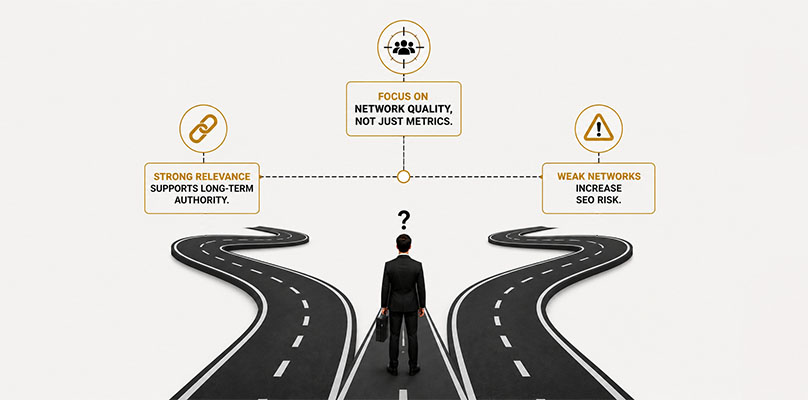
The decision to invest in buy PBN backlinks service usually depends far more on the quality and stability of the authority ecosystem behind the links than on the backlinks alone. Some networks are maintained carefully with strong topical relevance, natural authority behaviour, and long-term structural consistency, while others depend mostly on surface-level metrics that look impressive initially but lack real stability underneath.
That difference often determines whether the backlinks help strengthen authority naturally over time or slowly create structural weaknesses that eventually lead to instability later in the SEO strategy.
When choosing to buy a PBN backlinks service makes strategic sense, and when it doesn’t
A PBN backlinks service usually makes more strategic sense when it supports already relevant content ecosystems, improves broader discoverability, and fits naturally within a balanced authority strategy instead of functioning like an isolated shortcut tactic focused only on rankings.
But problems usually begin when:
- Rankings are forced too aggressively
- Relevance becomes inconsistent
- Supporting ecosystem signals are missing
- Conversion-heavy pages receive concentrated authority too quickly
In those situations, the structural risks often start becoming much stronger than the visibility advantages, which can eventually weaken long-term SEO stability over time.
What to look for and what to walk away from in a PBN backlinks service in 2026
By 2026, evaluating a PBN backlinks service requires looking far beyond surface-level metrics and focusing more on how naturally the authority ecosystem behaves over time. Stronger networks usually maintain better topical consistency, stable content activity, natural crawl behaviour, lower structural footprints, and more gradual authority reinforcement instead of relying only on aggressive placement volume.
Weaker services often become noticeable through repetitive site structures, unrealistic ranking promises, aggressive outbound linking behaviour, and authority patterns that feel structurally unstable underneath. Even if the metrics appear impressive initially, poor ecosystem quality usually becomes much more visible over time through inconsistent performance and weaker long-term stability.
What Are PBN Links Actually Worth in the Attention Economy
The real value of what are PBN links in today’s attention economy usually depends on how effectively they accelerate visibility without weakening the long-term stability of the authority structure underneath. In many competitive industries, brands that gain discoverability earlier often build audience trust much faster simply because people repeatedly encounter them first across search environments.
Strong visibility advantages often come from:
- Faster discoverability
- Earlier audience trust formation
- Reinforced authority positioning
- Stronger competitive visibility
But visibility alone is rarely enough if the surrounding authority ecosystem cannot remain stable over time. Without strong structural consistency behind the backlinks, short-term attention gains can eventually become much harder to sustain long term.
Whether PBN links deliver enough value to justify the risk they carry long term
PBN links can create strong visibility advantages when they are integrated carefully within relevant content ecosystems and supported by natural authority patterns that feel balanced over time. Faster discoverability, earlier search positioning, and stronger authority reinforcement can sometimes provide real competitive advantages in aggressive industries, especially where timing influences audience trust heavily.
But the long-term value of those links always depends on whether the surrounding authority structure remains believable, stable, and naturally reinforced instead of relying only on temporary ranking spikes. In modern SEO, strong relevance, supporting ecosystems, and healthy visibility patterns usually matter far more than raw backlink volume alone because weak structural behaviour often increases long-term risk much faster inside an attention-driven search environment.
FAQs:
- Why do PBN links still exist despite constant algorithm updates?
Because search visibility still depends heavily on authority signals and backlink influence.
- Can PBN links affect how quickly a website gains attention online?
Yes, they can sometimes accelerate discoverability during competitive visibility windows.
- Why do some PBN strategies fail even after initial ranking growth?
Weak relevance, repetitive patterns, and unstable authority behaviour often reduce long-term trust.
- Are backlinks alone enough to make PBN links effective?
No, surrounding factors like content quality, crawl behaviour, and ecosystem stability also matter.
- What makes modern PBN strategies different from older ones?
Modern approaches focus more on natural authority environments rather than aggressive backlink placement alone.