
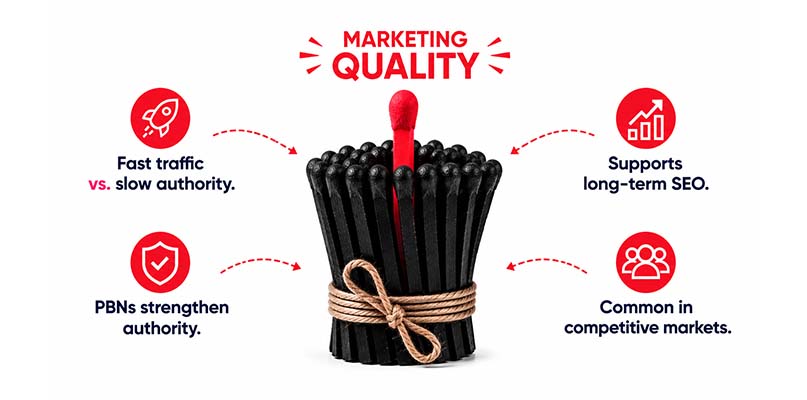
Performance marketing usually moves much faster than organic authority growth ever does. Paid campaigns can start generating traffic almost immediately, but building enough trust and visibility through organic SEO often takes significantly longer. That gap is one reason many marketers slowly started looking toward SEO PBN links, not always as shortcuts, but as a way to strengthen authority signals faster in industries where competition moves aggressively.
Over time, SEO PBN links became less about simple manipulation and more about solving a visibility problem inside highly competitive markets. When businesses are trying to scale performance campaigns profitably, relying only on slow organic growth often becomes difficult, especially when stronger competitors already dominate search visibility through established authority ecosystems. That reality is exactly why discussions around PBNs continue existing quietly within performance marketing even when very few openly speak about them publicly.
Why Performance Marketing Quietly Needs SEO PBN Links
Performance marketers usually focus far more on measurable acquisition and scalable visibility than simple ranking positions alone. As paid campaigns begin growing aggressively, the weakness of a website’s organic authority often becomes much more noticeable because traffic costs increase while long-term search visibility still remains limited. In many competitive industries, relying only on paid traffic eventually becomes expensive without stronger authority supporting the brand organically in the background.
That pressure is one reason SEO PBN links slowly became part of many performance-focused strategies. Marketers began realizing that faster authority reinforcement could help strengthen discoverability, stabilize acquisition efforts, and support paid campaigns more effectively alongside organic growth instead of depending entirely on advertising alone.
How SEO PBN links became the shortcut performance marketers quietly started reaching for
Building organic authority naturally usually takes time, but performance marketing rarely operates with that kind of patience. Businesses investing heavily into paid campaigns often want stronger organic visibility much faster because authority directly influences discoverability, trust, and even conversion performance across competitive search environments.
That’s one reason SEO PBN links slowly became attractive to many marketers working inside aggressive acquisition-focused industries. Instead of waiting months or years for backlinks to grow organically, controlled authority systems offered a way to strengthen visibility signals much faster around existing campaigns and search positioning.
- Faster authority reinforcement
- Quicker visibility support
- Stronger search positioning around paid campaigns
Over time, many marketers stopped viewing PBN authority as just another SEO tactic and started seeing it more as a supporting layer that could help broader performance systems scale with greater consistency and visibility support.
What Most Marketers Get Wrong About Backlinks PBN
A lot of marketers still judge backlinks PBN mainly through screenshots, DA metrics, or temporary ranking spikes without fully understanding how those links behave once they become part of a real SEO strategy. But backlink performance inside live campaigns is usually much more dependent on relevance, authority consistency, and structural alignment than the sales pitch surrounding the links initially suggests.
PBN links can sometimes improve visibility effectively, but they can also quietly weaken authority patterns when they are placed too aggressively or without enough supporting relevance surrounding them. In many situations, the problem is not the backlink itself, it is how unnatural the broader authority structure begins looking once those signals are integrated into the campaign.
- Metrics alone rarely reveal structural quality
- Relevance matters more than temporary ranking spikes
- Weak placement strategy can destabilize authority patterns
- Supporting visibility signals influence long-term performance
When they genuinely move performance and when they quietly work against it
PBN backlinks service help performance when they reinforce authority structures that already feel relevant, balanced, and naturally connected to the broader content ecosystem surrounding the website. In situations where strong content, niche alignment, and supporting visibility signals already exist, controlled authority reinforcement can sometimes improve discoverability and search positioning much faster without making the overall structure feel overly forced.
But problems usually begin when the backlink strategy becomes too aggressive or disconnected from the surrounding authority environment. Once relevance starts feeling inconsistent, supporting signals disappear, or too many direct authority patterns point aggressively toward conversion-focused pages, the backlinks often stop behaving like support systems and begin creating structural imbalance instead.
Choosing a PBN Backlinks Service – What the Pitch Leaves Out

Most PBN backlinks services heavily promote metrics because numbers and screenshots are much easier to sell than explaining the actual quality of the infrastructure behind the network. But real long-term authority usually depends far more on structural stability, relevance consistency, and how naturally the network behaves over time than the surface-level signals shown during the sales process. A network can look powerful at first glance while still carrying weak authority foundations underneath that eventually create instability once the links become part of a live SEO strategy.
Red flags that look like quality signals but aren’t
One of the biggest issues in the PBN industry is that weak networks are often packaged in ways that make them appear far more impressive during sales conversations than they actually are structurally. High authority metrics, huge placement numbers, and extremely fast delivery promises can easily create the impression of quality even when the deeper infrastructure behind the network is unstable or poorly maintained.
Some warning signs usually include:
- Identical site structures
- Generic AI-style content
- Unrealistically cheap pricing
- Aggressive outbound link patterns
The problem usually does not become obvious immediately, but over time weak infrastructure often starts revealing itself through unstable authority behavior, inconsistent ranking movement, and backlink patterns that no longer feel naturally reinforced.
Where SEO PBN Links Fit in a Performance Funnel And Where They Break It
SEO PBN authority usually works more effectively when it supports broader visibility and awareness layers instead of being placed too aggressively around high-conversion assets. Performance funnels depend heavily on trust consistency, and when authority signals become overly concentrated near revenue-focused pages, the overall structure can start appearing much more unnatural over time.
That’s why successful performance SEO often depends not only on the backlinks themselves, but also on where and how those links are positioned throughout the funnel so the authority flow feels balanced, relevant, and structurally believable.
The funnel stages where PBN authority supports paid performance without structural risk
SEO PBN links usually perform more naturally when they support the upper stages of the funnel where the focus stays on visibility, awareness, discoverability, and informational content instead of pushing aggressive authority directly toward conversion-heavy pages from the beginning.
PBN authority generally feels safer around:
- Informational content
- Supporting niche articles
- Awareness-stage visibility pages
- Contextual discovery layers
That separation helps the authority flow build more gradually and naturally instead of concentrating aggressive signals too closely around revenue-focused assets where structural risk tends to increase much faster.
How content and social signals make PBN authority look natural alongside paid activity
Content marketing and social visibility help reduce how isolated PBN authority appears by creating additional layers of relevance, engagement, and activity around the broader ecosystem. When visibility starts growing across multiple connected channels at the same time, the overall authority structure usually feels much more naturally reinforced instead of artificially pushed.
Supporting signals usually include:
- Social engagement activity
- Secondary content visibility
- Supporting niche discussions
- Reinforced discovery pathways
Together, these surrounding layers help the broader authority ecosystem blend more naturally alongside paid traffic activity rather than making the backlink patterns appear overly concentrated or structurally forced.
Are SEO PBN Links Worth It in Performance Marketing?
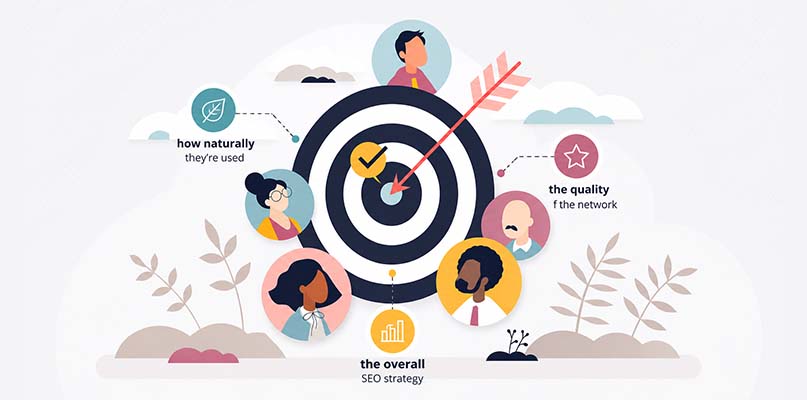
SEO PBN links are not automatically beneficial or harmful within performance marketing because their real impact usually depends on how naturally they fit into the broader authority ecosystem, how stable the supporting structure remains over time, and whether the strategy focuses on sustainable growth instead of chasing short-term ranking spikes alone.
In some cases, they can genuinely help accelerate visibility and strengthen broader acquisition efforts more efficiently. But in other situations, poorly integrated authority patterns can quietly introduce structural instability that eventually weakens the long-term performance of the entire system.
When SEO PBN links are genuinely worth it and when they are not
SEO PBN links usually work best when they strengthen already relevant content ecosystems, support visibility naturally, and remain positioned as part of a broader authority structure instead of acting like aggressive shortcut systems focused only on immediate ranking movement.
But when backlinks PBN strategies depend too heavily on manipulation without enough relevance, engagement, and supporting ecosystem diversity surrounding them, the short-term gains often become much weaker compared to the long-term structural risks that begin building underneath.