
Buying the best PBN links has become so normal in SEO that many people rarely stop to question how the process actually works anymore. They see high DA numbers, bold promises, and claims of quick ranking improvements, and naturally assume that stronger metrics will automatically lead to better results. But SEO is rarely that straightforward.
A backlink is never just a simple link placement on another website. Every link carries context behind it like where it’s placed, how relevant the surrounding content is, whether the website itself makes sense for your niche, and how naturally that authority connects to your page. That’s why some backlinks slowly strengthen a website over time, while others quietly create instability without the website owner noticing immediately.
The problem is that most people only evaluate what’s easy to see. They focus on the domain metrics, the DA score, or the authority label attached to the website, but overlook the environment surrounding the link itself. And in many cases, that hidden structure is what actually determines whether the backlink helps your website grow or gradually weakens the trust signals behind it.
You Are Not Buying Links, You Are Buying Someone’s Judgment
When most people buy backlinks, they assume they’re simply purchasing authority for their website. But the reality is a lot deeper than that. What you’re really paying for is the judgment behind the placement. Every backlink reflects a chain of decisions, why that site was chosen, how relevant it is to your niche, where the link is placed, and whether the overall context actually supports your page naturally.
This is why two backlinks with almost identical metrics can produce completely different outcomes. One link may strengthen your rankings steadily because it fits naturally within the topic and environment. The other may look strong on the surface but still create weak or disconnected signals that never truly help your site grow. A well-placed backlink usually comes from someone who understands context, structure, and alignment, not just metrics. And that difference becomes visible in the long run, because strong SEO signals don’t just look powerful, they also make sense together naturally.
Why the real product is never the link itself but the decision behind it
The real value of a backlink rarely comes from the link alone. It comes from the decisions behind where that link is placed and how naturally it fits within the overall environment. A strong backlink usually sits inside content that makes sense, on a website that relates to your topic, in a context that feels connected rather than forced.
When that level of judgment is missing, even a high-metric link can start feeling artificial. On the surface, everything may look impressive, but the surrounding signals don’t properly support your niche or reinforce your authority in a meaningful way.
Poor placement decisions often lead to things like:
- Links appearing inside unrelated or weak content
- Signals that fail to strengthen your topical relevance
- Short-term ranking movement that fades over time
This is why experienced SEO professionals rarely focus only on numbers. They spend far more time evaluating relevance, structure, and fit. Because in the end, search engines don’t just look at the link itself, they look at whether the entire placement makes sense together.
The Label “Best PBN Links” Is Where the Manipulation Begins
The phrase “best PBN links” sounds convincing almost instantly but the reality is that SEO quality is far more complex than a catchy phrase. A backlink strategy cannot be judged by labels alone because strong authority comes from how well everything connects together over time. Relevance, consistency, placement quality, and topical alignment are what actually influence long-term results, not just attractive marketing language.
You’ll often notice that weaker sellers rely heavily on:
- Broad promises instead of real transparency
- Metrics without explaining relevance
- Aggressive wording that sounds impressive quickly
- Quantity-focused offers instead of structured placements
In the end, real authority is usually built quietly through consistency and relevance, not through labels designed to sell fast.
Why the sites selling hardest are usually delivering the least
In the SEO world, the loudest sellers are not always the ones offering the best quality. In fact, truly strong backlink PBN networks usually don’t rely on exaggerated promises or overly aggressive marketing. Their value tends to show through consistency, relevance, and the long-term stability of the results they help create. On the other hand, weaker sellers often depend heavily on bold claims because the actual structure behind their links isn’t strong enough to speak for itself. That’s why you’ll often see big guarantees, flashy metrics, and promises of fast rankings being pushed much harder than explanations about relevance or placement quality.
The difficult part is that these problems rarely become obvious immediately. At first, everything can seem fine. The links are live, the metrics look strong, and there may even be small ranking improvements. But over time, the weaknesses underneath the strategy start becoming visible. Rankings become unstable, growth slows down, and the backlink profile stops building authority in a natural way.
This is why experienced SEO professionals usually pay more attention to consistency and structure than to marketing promises. Because in the long run, strong backlinks don’t just look impressive on paper, they continue supporting the site naturally over time.
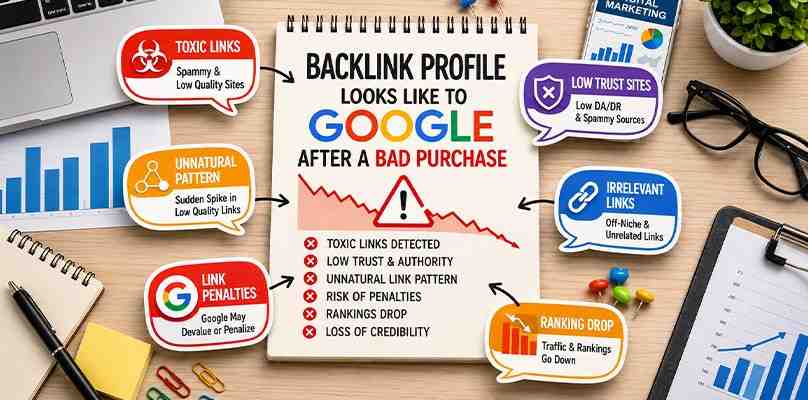
What Your Backlink Profile Looks Like to Google After a Bad Purchase
One of the hardest things about a bad backlink purchase is that the damage usually doesn’t appear right away. In the beginning, everything can seem completely normal. The links get indexed, the pages stay live, and sometimes rankings even show small improvements. Because of that, it becomes very easy to assume the strategy is working.
This is where problems slowly start showing up:
- Rankings become less stable over time
- Growth starts slowing without a clear reason
- Certain pages struggle to maintain positions
- The backlink profile begins looking unnatural as a whole
But search engines don’t evaluate backlinks only one at a time forever. Over time, they begin looking at the bigger picture and the overall patterns forming around your site.
What makes this difficult is how gradual the process feels. The issue usually isn’t a single link, it’s the combined pattern created by multiple weak or poorly aligned placements. Once enough of those signals build up together, the backlink profile starts losing clarity and trust.
How backlinks PBN from weak networks leave a pattern you cannot unsee once you know it
Weak backlinks PBN networks often leave behind very similar signs, even when they try to appear different on the surface. At first, those details may not seem important. But once you start understanding how backlink profiles are evaluated, the pattern becomes surprisingly easy to notice.A lot of low-quality networks tend to reuse the same structure. The content feels shallow or overly generic, the websites look strangely similar, and the topics often feel disconnected from each other. In many cases, the sites exist mainly to place outbound links rather than to provide any real value on their own.
Individually, these signals may not look serious. One weak article or one unrelated placement might not stand out immediately. But when multiple links from similar environments start building around a website, the overall backlink profile begins to feel artificial rather than naturally earned.
Over time, this changes how your authority appears. Instead of looking like genuine growth supported by relevant mentions, the profile starts giving the impression of manufactured placements built mainly for SEO purposes. And once that pattern becomes visible, it’s very difficult to ignore it.
What Expert PBN Links Understand That Generic Sellers Never Will
There’s a big difference between a network built for real long-term SEO and one created just to sell links quickly. Expert PBN links are usually planned around niche relevance and consistency from the beginning, even before any client links are added. That’s what makes the authority feel more natural and connected over time.
Strong networks usually focus on:
- Keeping topics closely related
- Maintaining consistent content quality
- Creating placements that fit naturally within the niche
Generic sellers often focus more on selling volume, while expert PBN links focus on building an environment where authority can actually grow properly.
How expert PBN links are built around a niche before a client ever appears
Well-built PBN networks are usually created with a clear niche focus from the start. The sites, content, and link placements are kept closely related so the authority flows naturally and makes sense within the same topic area.
This usually leads to:
- Stronger topical relevance
- Cleaner and more consistent signals
- Placements that feel more natural
Generic sellers often work the other way around. They create broad networks first and later place completely unrelated clients into them. And over time, that difference becomes very visible in the quality of the signals being passed.
What backlinks PBN from low quality sources look like from your performance data
Low-quality PBN backlinks usually don’t create obvious problems overnight. Instead, their impact tends to show up slowly through your site’s overall performance, which is why many people miss the warning signs in the beginning. You may start noticing rankings becoming unstable, traffic growth slowing down, or pages struggling to hold their positions consistently. Even new content may take longer to gain visibility than before.
Because these changes happen gradually, they’re often mistaken for normal competition or algorithm updates, when in reality the backlink profile itself may be weakening the site’s overall trust and stability over time.
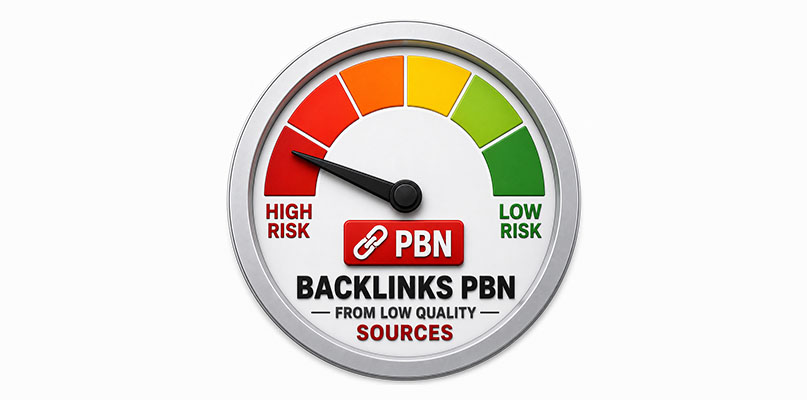
Why this signal always arrives later than it should
One of the most difficult things about weak backlinks is that the negative effects usually don’t appear immediately. In the beginning, everything may seem completely fine, which creates a false sense of confidence around the strategy.
But over time, the backlink profile slowly stops supporting trust the way it should. Rankings may start fluctuating more, growth becomes inconsistent, and the website gradually loses stability without a very obvious reason.
That’s what makes poor backlinks risky, they often weaken authority quietly long before the actual problem becomes noticeable.
What You Actually Owe Your Website Before the Next Purchase
Before investing in more backlinks, it’s important to take a step back and look honestly at your current website structure. More links are not always the answer. In many cases, the bigger issue is that the existing signals on the site are not properly aligned.
You may already have problems like:
- Weak topical relevance
- Pages targeting unclear intent
- Existing low-quality backlinks
- Authority not flowing properly through the site
If those issues are ignored, adding more backlinks usually creates confusion instead of real growth. Strong SEO results come from building signals that work together naturally, not simply increasing the number of links pointing to the site.
FAQs
Why aren’t all PBN links effective?
Because relevance, placement quality, and context matter more than metrics alone.
What makes expert PBN links different?
They are built around niche relevance and long-term authority, not just volume.
How do weak backlinks affect SEO?
They slowly create unstable rankings, weak trust signals, and inconsistent growth.
Why do bad backlink strategies look effective at first?
Because the negative signals usually appear gradually over time.
What should you check before buying more backlinks?
Audit your site structure, topical relevance, and existing backlink quality first.