
At the start, both websites looked like they were on the same track. They were in the same niche, similar content quality, and were putting in comparable levels of effort. In the early stages, there was no clear difference, you wouldn’t have been able to predict which one would eventually pull ahead.
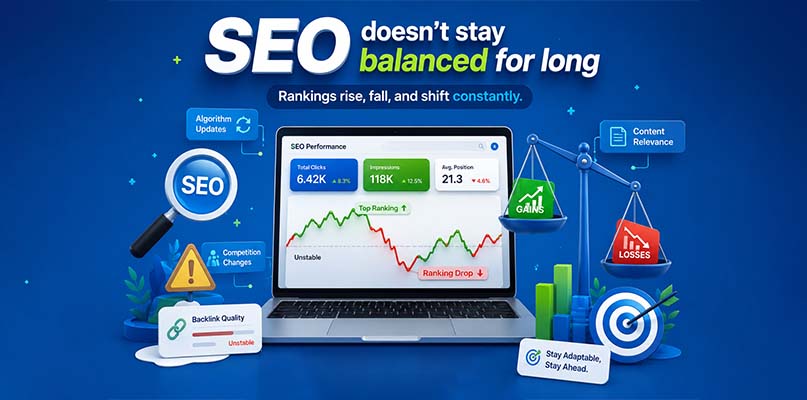
But SEO doesn’t stay balanced for long. Over time, small strategic choices begin to create noticeable gaps. One website focused mainly on publishing content and assumed that would be enough. The other took a quieter, more layered approach, investing in SEO link building services to build signals around its content to support and strengthen it.
What’s interesting is that neither website made mistakes. Both did things that made sense, but one stopped at content, while the other extended its efforts beyond it.
As time passed, the difference became clearer:
- One website relied only on content and saw slower, less stable growth
- The other strengthened its content with supporting signals and gained stronger traction
- One waited for results, while the other actively built towards them
This contrast highlights an important point, SEO isn’t just about doing the right things, but about how far you take them.
Why identical starting points can lead to very different outcomes
In the early stages, it is common for websites to perform similarly. Search engines do not have data to tell them apart, so they rely on basic factors like how relevant the website is, how it is structured and how good its initial content quality is. That’s why two websites can start off looking almost equal in terms of visibility.
But as time goes on, the evaluation becomes deeper. Search engines begin to look beyond the surface, asking which website appears more trustworthy, which one is supported by external signals, and which demonstrates stronger authority within its niche. This is where the difference starts to emerge.
The difference does not happen at once. Instead, it’s a gradual shift. One site slowly builds clarity and strength through consistent signals, while the other remains relatively static. Over time, that small gap turns into a noticeable difference in rankings and stability.
What gradually creates this gap:
- External signals begin to carry more weight than just on-page optimization
- Authority develops unevenly between competing sites
- Consistency in signals becomes more important than effort alone
This is why two websites that start at the same point can end up in very different positions, it’s not just about what you do early on, but how those signals evolve over time.
The website that ignored link building – what happened over time
This website followed a path that many people consider safe, it focused entirely on content. It published consistently, covered relevant topics, and maintained a steady rhythm. For a while, that approach worked. Some pages began to rank, and traffic started growing at a comfortable pace.
But over time, things began to change. The website was not moving forward fast as it used to and its search results were not as stable. Pages would move up for a short period, then drop back again without a clear reason. It was not that the content had become weaker, it was that other sites were starting to build stronger authority around similar topics.
Gradually, competitors with more developed backlink profiles and proper SEO link building services began to take those positions.The shift wasn’t dramatic, but it was consistent enough to be noticeable.
What made this difficult to catch was how subtle it felt:
- There was no sudden drop or visible failure
- Traffic didn’t disappear overnight
- Rankings didn’t collapse, they just became harder to maintain
Over time, the website didn’t lose everything, it simply lost its ability to hold onto the positions it once reached. And that’s often how gaps in authority show up not as a sharp decline, but as a slow, steady drift.
Why good content alone isn’t enough to hold rankings anymore
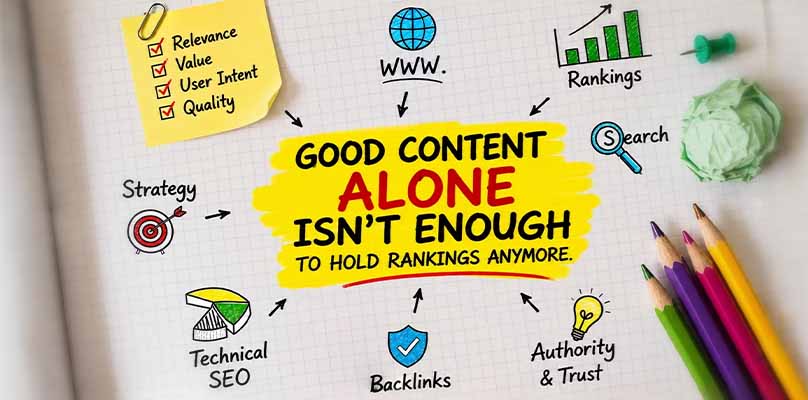
Good content can help you get noticed, it can bring your pages into the rankings and even push them close to the top. But when several websites are offering similar quality, content alone isn’t always enough to keep you there. At that point, search engines need additional signals to decide which site deserves to stay ahead.
That’s where backlinks start to matter more. They act as a form of validation, showing that other sources recognize and support your content. Without that support, even well-written pages can struggle to maintain their position over time.
The website that invested – what it did differently
The second website took a slightly different path. Instead of relying only on content, it treated link building as a core part of the process from the very beginning. It didn’t see links as something to add later, but as something that should grow alongside the content itself.
Rather than trying multiple tactics all at once, it followed a more structured, step-by-step approach. Each signal was built carefully, making sure it supported what was already in place. This created a sense of direction, where every effort contributed to a clearer overall strategy.
In the early stages, this approach didn’t feel fast but the growth was steady. However, over time, that consistency started to show its value.
What set this approach apart:
- Link building was integrated from the start, not added later
- Efforts were layered gradually instead of rushed
- Each step reinforced the previous one, creating stronger alignment
As a result, the website’s progress became more stable. Instead of fluctuating, its rankings began to hold and that stability made all the difference in the long run.
Why it started with Web 2.0 backlinks to build early authority signals
In the early stage, the goal was to dominate search results, it was simply to become visible and easier for search engines to understand. Before any strong growth can happen, a website needs a basic layer of signals that help it get recognized and evaluated properly.
This is where Web 2.0 backlinks played a role. They helped establish an initial structure, giving the website a starting point that made it easier for search engines to crawl, index, and interpret what the content was about. Rather than trying to push rankings aggressively, the focus was on creating a stable baseline that could support future efforts.
At this stage, the emphasis was on helping pages get indexed smoothly, introducing early trust signals, and building a consistent foundation. It wasn’t about quick results, it was about setting things up in a way that made long-term growth possible.
How working with a PBN links agency added a level of control outreach couldn’t
Outreach-based links can be valuable, but they often come with a degree of unpredictability. You don’t always have control over where your link is placed, how it’s framed within the content, or whether it fully aligns with your niche. That lack of consistency can make it harder to build a clear, focused authority over time.This is where working with a PBN links agency began to shift things. By working with a more controlled setup, the website could be far more deliberate about how links were used. It became easier to decide which pages needed support, ensure that every placement stayed relevant to the topic, and avoid links that felt random or out of place.
The result wasn’t just an increase in the number of backlinks. It brought a sense of structure and clarity to the overall profile, making it easier for search engines to understand what the site represented and where it belonged.
How Web 2.0 backlinks built a credible foundation before stronger links were added
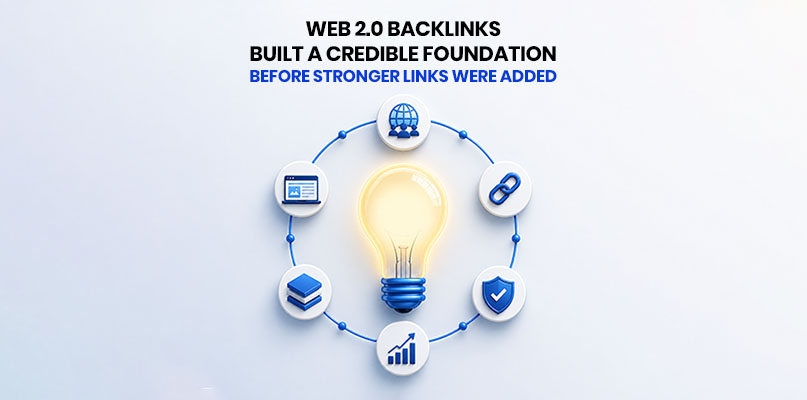
The early foundation stage is something many people underestimate, but it plays a major role in how effective everything that follows will be. Before aiming for stronger, high-impact links, the website focused on creating a base layer that made its growth look natural and structured.
Web 2.0 backlinks helped establish that initial layer. They gave the website a starting framework, something that search engines could recognize and build upon. So when more powerful links were introduced later, they didn’t appear out of place or disconnected. Instead, they blended into an already existing pattern, making the overall profile feel more consistent and believable.
This approach made the growth process feel much more stable. Rather than forcing sudden movement, it allowed authority to build gradually, which is often more sustainable in the long run.
What this created over time:
- A steady progression without sudden spikes that raise suspicion
- Link patterns that appeared natural and easy to interpret
- A smoother transition when stronger links were introduced
Because of this layered buildup, each new link added more value instead of standing alone. The result wasn’t just growth, it was growth that felt stable, structured, and easier for search engines to trust.
The point where one site started compounding and the other slowly faded
There comes a stage where the difference between two similar websites becomes hard to ignore. What once looked equal begins to separate in a very clear way.
The second website didn’t just improve, it started building on itself. Every new page benefited from the authority already in place, making it easier to gain visibility and hold positions. Growth no longer felt forced; it began to carry its own momentum.
The first site, however, faced a different reality. Even the positions it had previously achieved became difficult to maintain. Instead of moving forward, it found itself trying to hold ground and slowly losing it.
This is where SEO starts to shift in a more meaningful way:
From effort – to momentum, where past work begins to support future growth
From pushing – to sustaining, where maintaining positions becomes easier than chasing them
From building – to compounding, where each step strengthens the next
Once this shift happens, the gap between sites widens quickly. Catching up is no longer just about doing more, it requires rebuilding the kind of foundation that allows momentum to take over.
What the ignored site could have done differently
Looking back, the outcome for the first website didn’t need a complete overhaul, it just needed a shift in approach. The issue wasn’t a lack of effort, but how that effort was directed. Instead of relying solely on content to carry performance, the website needed to actively support it with the right signals from the beginning.
If that support had been in place earlier, the outcome would have been very different. Small, consistent adjustments tend to have a bigger impact over time than large changes made too late. SEO often rewards alignment more than intensity.
A few early decisions could have changed the direction:
Building links steadily alongside content, rather than waiting until progress slowed
Focusing effort on key pages that had the potential to rank, instead of spreading attention too thin
Choosing relevant, context-aligned placements instead of adding links without a clear purpose
None of these changes require doing more, they require doing things with clearer intent. And in SEO, that clarity is often what separates steady growth from missed opportunities.
What this story means for your website right now
This isn’t just a hypothetical situation, it reflects what’s actively happening across many websites today. The gap between sites doesn’t appear overnight, it builds quietly based on the decisions being made every day. Whether it’s visible or not, your site is always moving in one direction.
At any given point, your website is either:
Building authority through consistent, aligned SEO link building services
Or gradually losing ground to competitors who are doing it more effectively
The important part is recognizing where you stand before the gap becomes too wide. Waiting until rankings drop or traffic declines often means you’re reacting late, rather than building proactively.
What you can do right now:
- Strengthen key pages with focused, relevant link support instead of spreading effort thin
- Maintain consistency in your strategy so signals build over time instead of resetting
- Prioritize quality and relevance in every link rather than chasing volume
- Regularly review your backlink profile to ensure it aligns with your niche and goals
The takeaway isn’t just awareness, it’s action. Small, deliberate steps taken early can prevent larger problems later. In SEO, progress isn’t always loud or immediate, but it is always moving. The sooner you align your strategy with that reality, the better positioned your site will be over time.