
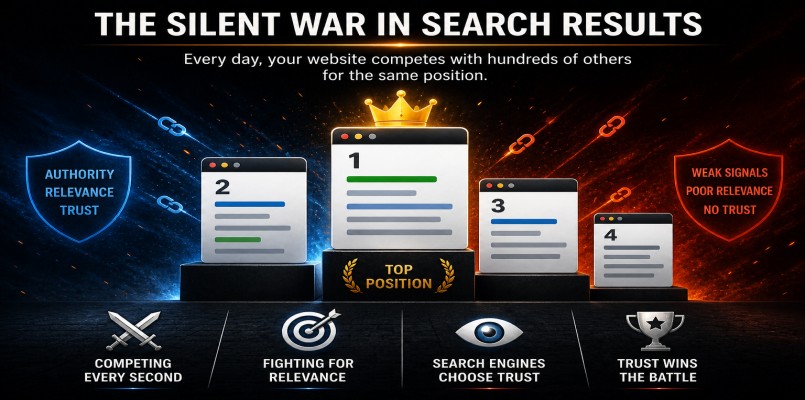
If you pay close attention to search results, you’ll notice that trust isn’t something that builds only after a user clicks on a website, it is what decides whether the website appears in the first place. Some websites immediately come across as reliable and established, while others, even with similar content quality, struggle to gain the same level of visibility.
This difference isn’t just random. It comes from how clearly a website communicates its authority. Search engines are constantly evaluating which sites feel dependable within a given topic, and that judgment is based on those patterns that are built over time.
In highly competitive niches like gambling, this becomes much easier to observe. The margin for error is smaller, and only well-structured signals tend to hold up. High quality casino backlinks do not just help with rankings but they reveal how trust is actually formed, supported, and maintained behind all those processes.
What shapes this perception of trust:
- Consistency in signals across your content and backlinks
- Clear alignment between your site and its niche
- External validation from relevant, credible sources
When all of these elements come together, your site doesn’t just rank, instead it becomes easier to trust. And once that trust is established, everything else from visibility to stability starts to follow more naturally.
Trust Is the Most Valuable Currency Online
Trust is what quietly drives everything in SEO. Without it, even well-written content can struggle to get noticed. Search engines don’t evaluate every website on equal terms. They’re constantly trying to identify which websites appear reliable, consistent, and supported by signals that make sense within a given topic. As your website develops, this evaluation doesn’t remain static, it becomes more refined, taking into account how your signals evolve and how consistently they align.
Over time, you begin to see a clear pattern. Websites that are trusted tend to move differently. New content gains traction more quickly, rankings feel more stable, and there’s less need to constantly adjust or “push” for visibility. It’s not what these websites are doing. Something drastically different in every moment, but they’ve built a foundation that supports their efforts.
Why credibility is decided before a single word gets read
Before your content even appears in search results, your website has already gone through a layer of evaluation. Search engines don’t simply look at a single page and decide its position, they analyze whether your entire domain fits within that result set. This decision is based on how well a page is optimized.
What matters here is how your website presents itself as a whole. The types of websites linking to you, the consistency of your content within a specific niche, and how well your signals align all contribute to that judgment. If everything points in the same direction, your website becomes easier to understand and trust. But if those signals are mixed or unclear, it creates hesitation and that hesitation affects visibility.
This is why rankings aren’t determined solely by what you’ve written. Even before a user has the chance to read your content, search engines are deciding whether your website deserves to be shown at all.
The Silent War Happening Between Every Competing Website Right Now
Every search result is a part of an ongoing comparison. Your webpage is constantly being evaluated alongside other pages targeting the same query. In the beginning, the differences between these pages may seem minimal, especially when most of them are well-written and optimized.
But as time goes on, the way they’re judged starts to change. It is no longer just about who has slightly better content, it becomes about which website appears more dependable within that topic. Search engines begin to look at patterns, consistency, and how clearly each website fits into its niche.
What starts shaping that comparison over time:
- How consistently your site reinforces the same topic across pages
- The kind of external signals (like backlinks) supporting your content
- Whether your overall profile feels clear or scattered
Because of this, rankings don’t just reflect content quality, they reflect how confidently a website can be placed within a specific space. And in that quiet, ongoing comparison, even small differences in clarity and consistency can decide which site moves ahead and which one stays behind.
Why the top websites are winning isn’t about effort – it’s trust
At a certain level of competition, most websites are already doing the basics right. They follow standard SEO practices, publish well-structured content, and target the same set of keywords. From the outside, it can look like everyone is putting in a similar amount of effort and in many cases, they are.
But this is where the difference starts to shift. When effort becomes comparable across competitors, search engines need a clearer way to decide who deserves to rank higher. That’s when trust and clarity begin to take over as the deciding factors.
At competitive levels, most websites:
- Follow established SEO best practices
- Publish optimized and relevant content
- Target similar keywords within the same niche
Because of this, effort alone stops being enough. The sites that consistently move ahead tend to show stronger signals that make them easier to trust.
You’ll often notice that they:
- Have stronger external validation through relevant backlinks
- Maintain a clear and focused topical direction
- Build signals that support each other instead of creating confusion
Over time, this creates a noticeable gap. It’s no longer about who is working harder, it’s about who is building a clearer, more consistent presence. When everything aligns, search engines can understand and trust that site more easily, and that clarity becomes the real advantage.
How niche relevant backlinks become the deciding vote in that battle
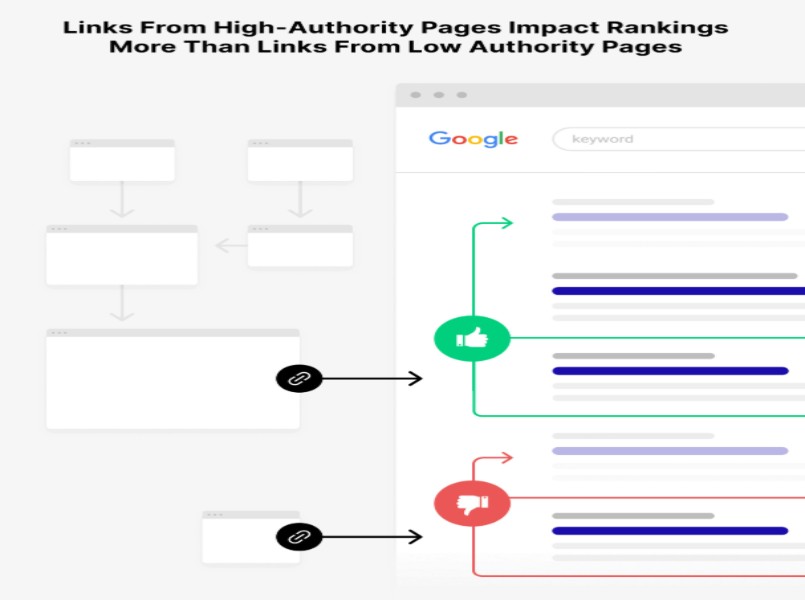
Backlinks are often described as signals of recognition, but that only holds true when they make sense within the context of your niche. A link on its own doesn’t automatically add value, it needs to align with what your website is about and where it fits. When that alignment is present, the link strengthens your authority. When it isn’t, it can become just another disconnected signal.
In competitive niches, this distinction becomes much more visible. Search engines don’t just count links, they interpret them. Niche relevant backlinks from a closely related source carries more meaning because it fits naturally into the broader topic. The surrounding content, the relevance of the website, and how consistently similar signals appear all influence how that link is understood.
Over time, these aligned signals begin to work together. Instead of acting as individual endorsements, they form a pattern that defines your website’s role within the niche. This is why backlinks are less about accumulation and more about agreement. When multiple relevant sources point in the same direction, it becomes easier for search engines to recognize your authority, and that recognition is often what separates stable rankings from temporary ones.
Why High Quality Casino Backlinks Expose What SEO Theory Never Could
Casino SEO operates in a space where there’s very little room for error. Unlike less competitive niches, weak or inconsistent signals don’t just slow you down, they tend to lose impact almost immediately. Because of that, this niche makes it much easier to see what actually drives results, rather than what simply sounds good in theory.
What becomes clear over time is that success here isn’t about doing more, it’s about doing things with precision and alignment. The way a high quality casino backlinks is placed, the context it appears in, and how it connects with your existing signals all play a much bigger role than sheer volume. When everything fits together naturally, the impact becomes stronger and more stable.
This environment reveals something that often gets overlooked in general SEO discussions, it’s not individual actions that matter most, but how well those actions connect to form a clear, consistent structure. You start to notice that highly relevant signals tend to outperform broader ones, and that poorly aligned efforts can weaken overall trust, even if they look strong on the surface.
Relevance Is Not a Feature, It Is the Whole Game
Without relevance, even strong efforts can feel disconnected. Search engines are constantly trying to understand where your website belongs, and that understanding depends on how clearly your signals point in one direction. When everything aligns, your website becomes easier to interpret. Authority starts building naturally, and your progress feels more stable because each signal supports the next. But when relevance is inconsistent, it creates uncertainty. Search engines hesitate, and that hesitation shows up as slower growth or fluctuating rankings.
When relevance is strong:
- Your authority builds in a clear, focused direction
- Rankings tend to stabilize more quickly
- Signals reinforce each other instead of competing
When relevance is weak:
- Progress becomes uneven and harder to predict
- Signals start to conflict with each other
- Growth slows despite continued effort
What usually defines strong relevance:
- Niche relevant backlinks coming from closely related topics
- A consistent direction in your content across pages
- Link placements that feel natural within their context
Why Effort Without Direction Builds Noise Instead of Authority
Putting in more effort doesn’t always translate into better results. In fact, when that effort isn’t guided in a clear direction, it can start working against you. Instead of building strength, it creates scattered signals that are harder for search engines to interpret.
When everything isn’t aligned:
- Signals begin to compete rather than support each other
- Authority feels spread out instead of focused
- Results become inconsistent and harder to predict
This is why SEO can feel frustrating at times. You may be doing all the right things creating content, building links, staying active but if those efforts don’t connect, they don’t build momentum. Real progress comes when each action supports the next, creating a clear and consistent path forward.
What affordable SEO link building services understand that most strategies miss
Effective SEO isn’t just about doing more, it’s about doing things in a way that actually connects. Many strategies focus on activity, but overlook structure. That’s where the difference lies.
Affordable SEO link building services pay attention to how everything fits together. Instead of spreading effort across too many areas, they focus on strengthening the parts of your website that matters the most and ensuring every signal supports the bigger picture.
They tend to:
- Focus on key pages that have the highest potential to rank
- Keep link sources consistent and relevant to the niche
- Avoid placements that don’t align with the overall strategy
The shift may seem small, but it changes how results build over time:
From doing more – to doing things that reinforce each other
This is where many strategies fall short. It’s not that they’re executed poorly, it’s that they lack alignment. And without that alignment, even strong efforts struggle to create lasting impact.
Why consistency is what turns rankings into a lasting position
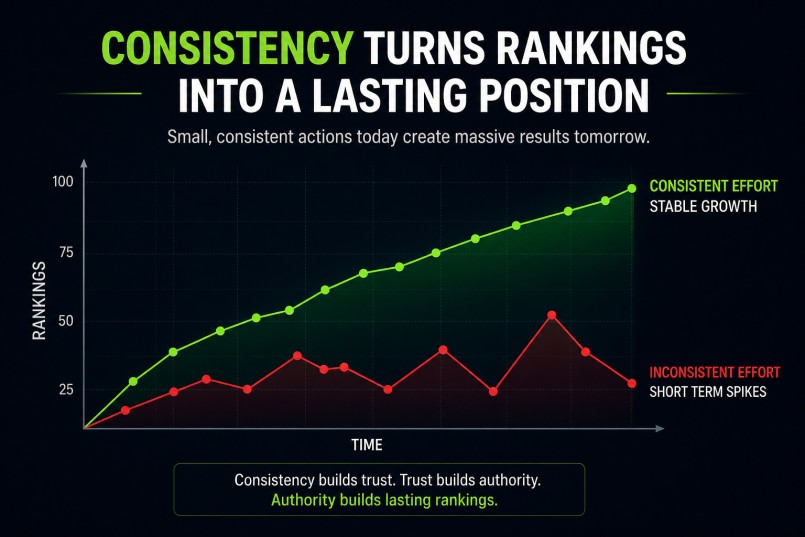
Consistency is what turns short-term gains into something more stable. When your signals stay aligned over time, your website becomes easier to trust, and that trust starts reflecting in how your rankings behave. Instead of constant ups and downs, things begin to settle. Your positions feel less fragile, and your efforts start building on each other rather than resetting every time something changes.
You’ll start to notice:
- Fewer fluctuations in your rankings
- Positions holding steady for longer periods
- New pages gaining traction more quickly
This is the point where SEO starts to feel different. It’s no longer just about pushing for results, it becomes about maintaining a structure that supports them consistently. And that shift is what turns rankings from temporary wins into something much more reliable.
FAQs
- Why do some websites rank higher than others?
Because they show stronger trust signals and clearer authority in their niche.
- What makes a backlink truly valuable?
Its relevance, context, and how well it aligns with your website’s topic.
- Why is relevance more important than link volume?
Relevant links build stronger, clearer authority than large numbers of generic links.
- Why do SEO efforts fail even with consistent work?
Because the signals aren’t aligned, leading to confusion instead of authority.
- How does consistency improve rankings over time?
It builds trust, making rankings more stable and easier to maintain.