

Why These Niches Play a Different SEO Game
If you’ve handled SEO across different industries, you’ve probably run into this pattern, the tactics that produce quick wins in lifestyle, SaaS, or eCommerce barely move rankings in finance or legal and even when they do, the gains rarely hold for long.
That’s not a coincidence. These niches are evaluated very differently. Search engines aren’t just measuring relevance through keywords and backlinks, they are also assessing risk and credibility. Content in finance and legal spaces can directly influence someone’s money, decisions, or rights, which means it’s held to a much stricter standard. As a result, rankings in these areas tend to be slower to build, more heavily scrutinized, and less forgiving of weak sign
What often goes unnoticed is that the competition here isn’t really about who’s putting in more effort. It’s about who is reaching a higher level of trust expectation. Until your site consistently demonstrates that level of reliability and authority, even well-executed safe PBN links struggle to deliver lasting results.
What makes them harder to rank in than most admit
Most people openly acknowledge this fact and here is how differently signals are weighted.
- Trust signals matter far more than sheer volume
- Link quality is judged by context and relevance, not just metrics
- Contents on its own rarely drives rankings without strong authority behind it
- And what feels like “good enough SEO” often performs no differently than weak SEO in these spaces
In many other industries, growth can be pushed through volume publishing more content, building more links, targeting more keywords. That approach can still generate momentum elsewhere.
But in finance and legal niches, it tends to do the opposite. Instead of strengthening your position, it often creates scattered signals that weaken your authority. Search engines are particularly sensitive to that imbalance here, and they are very effective at distinguishing between genuine expertise and surface-level optimization.
Why tactics that work elsewhere quietly fail here
One of the most frustrating parts is that things don’t fail in an obvious way. Your strategy doesn’t stop working suddenly, it just gradually loses impact. You continue building links and following the same approach, but the results become weaker, slower, and less predictable.
The reason often comes down to how your signals are being interpreted. Generic backlinks don’t carry enough contextual relevance, so they add little real authority. Broad or inconsistent anchor usage can start to look unnatural when examined more closely. Building backlinks too quickly can raise subtle trust concerns, and when your backlinks come from mixed or unrelated niches, they blur your website’s positioning rather than strengthen it.
In less competitive or less sensitive niches, these issues might not have much effect. But in more demanding spaces, they don’t just get ignored, they build up over time. What starts as a small inconsistency eventually turns into a larger limitation, quietly holding your rankings back without any clear warning signs.
The Scrutiny Problem Nobody Warns You About
There’s a side of SEO that rarely gets discussed openly which is the level of scrutiny certain niches are placed under. In finance and legal, your website isn’t just being ranked, it’s being closely evaluated at multiple levels. Every backlink, brand mention, and piece of content you publish feeds into a larger trust profile. And unlike more relaxed niches, this profile isn’t assessed once and left alone. It is continuously reviewed, compared, and reinterpreted over time.
What makes this challenging is that progress doesn’t depend on isolated efforts. It depends on how consistently all your signals align. Even small inconsistencies can slow things down, because the system isn’t just asking “Is this relevant?” it is also asking “Is this reliable enough to be trusted?”
How Google evaluates finance and legal content differently
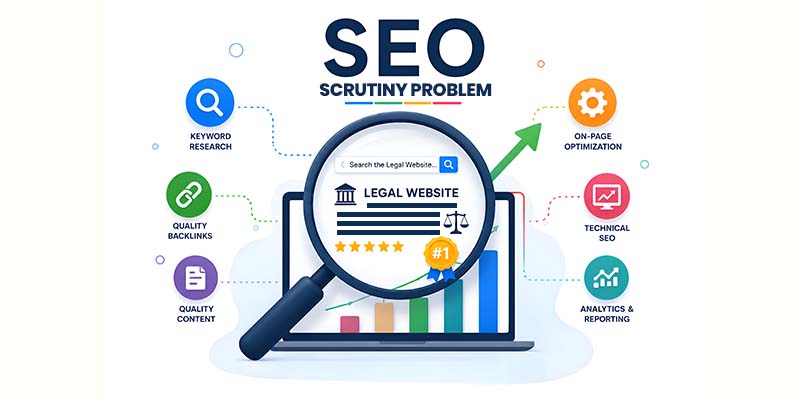
This is the point where E-E-A-T stops being just a theory and starts functioning like a real filter. Your site isn’t evaluated based on a few strong elements, it is judged on whether everything, taken together, reflects genuine and consistent expertise.
That’s why two websites with a similar number of backlinks can perform very differently. One sends a clear, focused signal of authority within its niche, while the other appears scattered, with signals that don’t fully connect. Even if both have put in effort, the clarity of those signals makes all the difference.
Over time, you start to notice certain patterns:
- Links from high DA PBN links tend to carry far more weight than expected
- The context surrounding a link can influence its value just as much as the link itself
- Consistency in signals repeated across multiple sources might build stronger trust than scattered variation
And one important detail often gets overlooked, weaker or mismatched signals don’t simply get ignored. They can actually weaken the impact of your stronger ones, making your overall authority appear less defined than it really is.
Why this changes your entire link-building approach
Once you understand that consistency is what really gets evaluated, your mindset around link building starts to shift. It’s no longer just about collecting links, it’s about how those links fit together and what they collectively communicate.
Each link becomes part of a bigger picture. Instead of simply adding authority, it should strengthen a clear, consistent pattern. That naturally makes your decisions more selective. You begin to focus less on whether a link looks strong on its own, and more on whether it actually aligns with your niche and existing signals.
That leads to a more selective process:
- You skip opportunities that don’t fit, even if they seem valuable
- You prioritize context and relevance over surface-level metrics
- You consider how each new link supports what’s already in place
There’s also a timing aspect to keep in mind. Sudden bursts of link building, especially without clear topical consistency, can feel unnatural in these niches.
Why Relevance Is Non-Negotiable in These Industries
In finance and legal SEO, relevance isn’t just another factor you optimize for, it is what everything else depends on. Without strong, consistent relevance, even well-built strategies struggle to gain momentum.
At a basic level, search engines are trying to answer a simple question like Does this site truly belong to this topic? Every backlink, every piece of content, and every signal you create contributes to that answer. When those signals are aligned, your authority becomes clearer and stronger over time. But when they’re inconsistent or off-topic, they introduce doubt.
That’s why relevance plays such a critical role here. It’s not just about improving rankings, it’s about building a clear, believable identity for your website within a specific niche. This is especially true when using a PBN backlinks service in regulated industries, where every placement needs to make contextual sense rather than just exist.
What Safe PBN Backlinks Do That Others Can’t
There’s a reason why PBNs continue to be used, even with the risks involved. When they’re handled poorly, they can cause more harm than good. But when they’re built and managed properly, they address a limitation that traditional link building often struggles with which is control. And in niches where scrutiny is high, that level of control becomes essential. You’re not just trying to get links but you’re trying to ensure those links appear in the right context, support the right pages, and provide a clear, consistent signal. This is where well-executed safe PBN backlinks stand out.
They allow you to:
- Place links within relevant, topic-aligned content
- Maintain consistency across multiple placements
- Avoid the unpredictability that comes with outreach-based links
In environments like finance and legal, where every signal is examined more closely, that control isn’t optional, it’s what allows your strategy to stay focused and effective over time.
How Niche Networks Build Authority That Lasts
A well-built niche network doesn’t act like a shortcut, it works more like an extension of your site’s authority. Each site within the network plays a specific role, contributing to a broader structure that strengthens your presence within a defined topic.
Instead of placing links randomly, the support is layered and intentional. One link might support a specific subtopic, while another strengthens a broader category. Over time, these connections come together to form a clear and consistent signal about what your website represents.
This kind of structured approach leads to:
- More stable and predictable ranking improvements
- Better impact from your internal linking strategy
- Faster recognition of your website’s topical authority
What really sets it apart is the intent behind it. Each link is placed with a purpose, and together they build a unified signal rather than a scattered collection of backlinks. For competitive verticals like gambling, PBN casino backlinks follow the same principle, where topical alignment and placement quality determine whether the links hold up or quietly lose their value.
Why the Long Game Always Wins in These Industries
In finance and legal SEO, quick wins rarely translate into lasting results. Strategies that seem effective in the short term often struggle to hold up once they come under deeper evaluation. What might look like rapid progress can just as quickly reverse if the underlying signals aren’t strong and consistent. The websites that succeed over time take a different approach. They focus on building trust gradually, making sure every signal and that includes content, links, and overall presence aligns with their niche. It’s a slower process, but it creates a foundation that can withstand ongoing scrutiny.
In these industries, sustainability matters more than speed. Long-term, consistent effort tends to outperform anything built on quick gains, because trust isn’t something that can be rushed, it has to be earned and strengthened over time.
Why patience leads to more stable results here than anywhere else
In these niches, patience isn’t about waiting, it’s about understanding how trust is built. Authority isn’t accepted instantly, it needs to be demonstrated consistently over time before it’s fully recognized. When that process is rushed, the results tend to be unstable. You might see short-term improvements, but they often don’t last because the signals behind them haven’t had enough time to settle and reinforce each other.
A more measured approach allows everything to come together naturally. It gives search engines the time to process, validate, and build confidence in your site.
- Building links at a pace that feels organic
- Giving authority signals time to strengthen and connect
- Avoiding sudden shifts that break consistency
It may not feel fast, but it creates a level of stability that quick, aggressive strategies rarely achieve.
What happens to rankings once trust is properly established
Once your website reaches a strong level of trust, the way SEO behaves around it begins to shift. You’re no longer constantly pushing to be seen, you’re already positioned within the space, and your efforts start working with momentum instead of against resistance.
Rankings tend to settle. The sharp ups and downs become less frequent, and improvements feel more consistent rather than temporary. Instead of starting from scratch with every update, your existing authority supports what you build next.
Over time, you’ll start to notice patterns like:
- Pages holding their positions with very little ongoing adjustment
- New content picking up visibility faster than before
- Competitors finding it harder to replace you without significantly stronger signals
This is where the real value shows. It’s not just about reaching higher positions, it’s about maintaining them with confidence. Whether you’re in finance, legal, or even using PBN casino backlinks in competitive gambling verticals, the same principles are applied throughout and consistent relevance are what ultimately separate strong sites from the ones that keep fluctuating. In finance and legal niches, that kind of stability is what ultimately sets strong sites apart from the rest.
FAQs
- Why is SEO harder in finance and legal niches?
Because search engines apply stricter trust and credibility checks, not just relevance.
- Why don’t generic backlinks work well here?
They lack relevance and consistency, which weakens authority signals in sensitive niches.
- What makes safe PBN backlinks effective?
They offer control, relevance, and consistent contextual placement.
- Why do rankings take longer to improve?
Because trust and authority need to build gradually over time.
- How do you know your SEO signals are aligned?
When your links, content, and topics consistently support the same niche focus.